
Paint correction

Paint correction focused on safer, visible improvement.

Machine polishing for suitable swirls, haze, wash marring, and light surface defects, with the scope guided by the paint in front of us.

Request paint correction
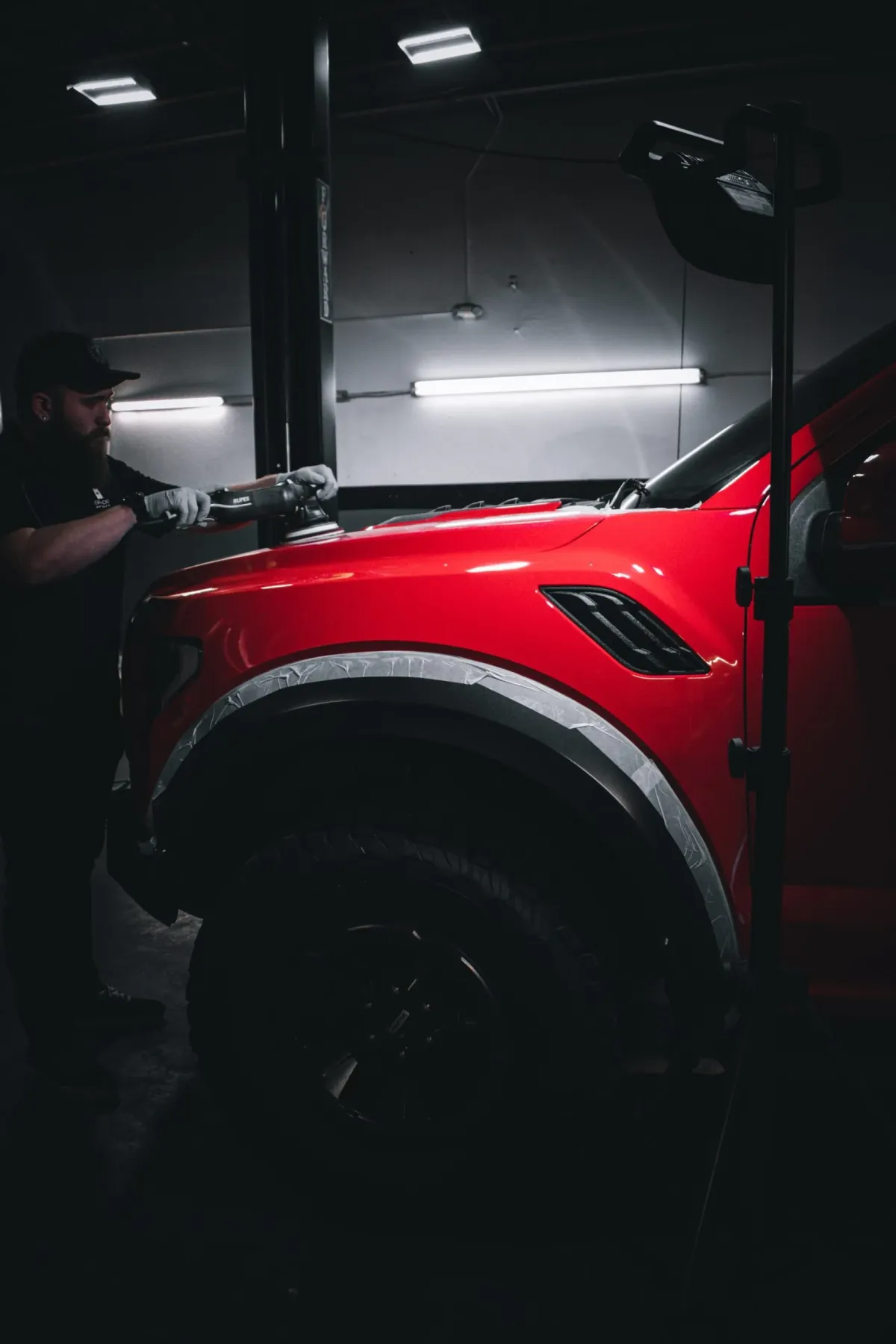
Technician machine-polishing red vehicle paint during correction

A condition-based service

Start with the vehicle in front of us.

Paint correction is an appearance-improvement process. Machine polishing, appropriate pads, and compounds or polishes are used to refine the clear coat. As the surface becomes more uniform, reflected light can look clearer and gloss can improve. The process may reduce the visibility of swirls, haze, wash marring, oxidation, and light scratches when those defects are within a safe working range.

Correction is not repainting, and responsible work does not begin with a blanket promise to remove every mark. Deep scratches, chips, rust, body damage, and failing clear coat are different problems. Some defects may be too deep to pursue safely. The goal and scope should balance the desired appearance against preservation of the remaining finish, which is why the vehicle needs to be cleaned and inspected before the polishing plan is confirmed.

The intended result also matters. A daily driver that lives outdoors may call for a different level of refinement than a vehicle prepared for a special purpose. Share what bothers you in normal lighting, how the vehicle is parked, how it is washed, and whether you plan to add longer-lasting protection. That information creates a more useful conversation than selecting correction solely from a generic package name.

Service scope

What paint correction is designed to do

A correction appointment separates safe appearance improvement from defects that require another kind of repair. The work may include:

  • Cleaning and surface preparation so contamination does not interfere with inspection or polishing.
  • Inspection of gloss, haze, swirl patterns, wash marring, and light scratches under useful lighting.
  • Machine polishing with a pad and product combination selected for the paint and agreed objective.
  • A final review of the corrected finish, remaining deeper defects, and suitable protection or maintenance.

Paint correction can reduce the appearance of suitable defects; it cannot make every scratch disappear. Chips, deep damage, rust, and clear-coat failure require a different assessment.

The process

Clear from request to pickup.

The exact work follows the confirmed scope, materials, and starting condition of your vehicle.

  1. 01

    Set the objective

    Describe the visible concern, the result you want, normal parking and washing, and any protection planned afterward.

  2. 02

    Prepare and inspect

    The exterior is cleaned and assessed so swirls, haze, scratches, and paint condition can be seen more clearly.

  3. 03

    Refine the paint

    Machine polishing is carried out to the confirmed scope with an emphasis on suitable improvement and finish preservation.

  4. 04

    Protect and review

    The refined surface is reviewed, remaining limitations are identified, and the agreed finishing protection is applied.

Choosing the right work

Correction and coating are different steps

Paint correction changes the appearance of the existing finish by refining suitable defects. Ceramic coating adds a durable protective layer to a properly prepared surface. A coating does not remove swirls or scratches, so visible defects that would bother you are normally discussed before protection is installed. Some vehicles benefit from both processes in sequence; others need only preparation and protection or a more limited improvement step.

Exterior washing and decontamination are also distinct from correction. Cleaning reveals the true condition, but it does not safely polish away defects. Start with exterior detailing when the main concern is buildup and routine protection. Start with correction when dullness, haze, or visible swirl patterns are the priority.

After the appointment

Preserve the corrected finish

Correction improves the finish but does not prevent new wash marring. Careful routine washing, clean tools, prompt removal of contamination, and suitable drying methods help preserve the result. Avoid aggressive scrubbing and automatic processes that may reintroduce marks to the clear coat.

If longer-lasting protection and easier routine cleaning are priorities, discuss ceramic coating after the desired paint improvement has been established. Protection supports maintenance; it does not make the paint invulnerable to scratches, chips, or impacts.

Common questions

Paint Correction FAQ

Have a condition-specific question? Include it with your vehicle details or call the shop.

236-591-WASH
Will paint correction remove every scratch?

No. Suitable light defects may become less visible, but deep scratches, chips, rust, body damage, and failing clear coat require a different assessment.

Does the vehicle need to be clean first?

Yes. Cleaning and surface preparation allow the paint condition to be inspected and help keep contamination out of the polishing process.

Should correction happen before ceramic coating?

If visible defects would bother you, the desired improvement is normally discussed before coating because protection tends to preserve the appearance beneath it.

What should I send with my request?

Include the vehicle, visible concerns, parking and washing conditions, recent bodywork if relevant, and whether appearance improvement or protection is the main goal.

Tell us about the vehicle and the result you want.